
🧠 Gamblers get a Dopamine spike Before they bet. Not After they win
Product
That’s what James Clear says in his book Atomic Habits. I had to read it 2–3 times before the idea really clicked.
Highly recommend this book if you:
a) build processes inside a company
b) interested in what makes users hooked and stay
Most people think dopamine comes after a win, like hitting a jackpot or claiming a cashback/free spins bonus.
❌ Big misunderstanding.
Dopamine actually spikes in anticipation, before the outcome.
And game providers use this a lot 😉
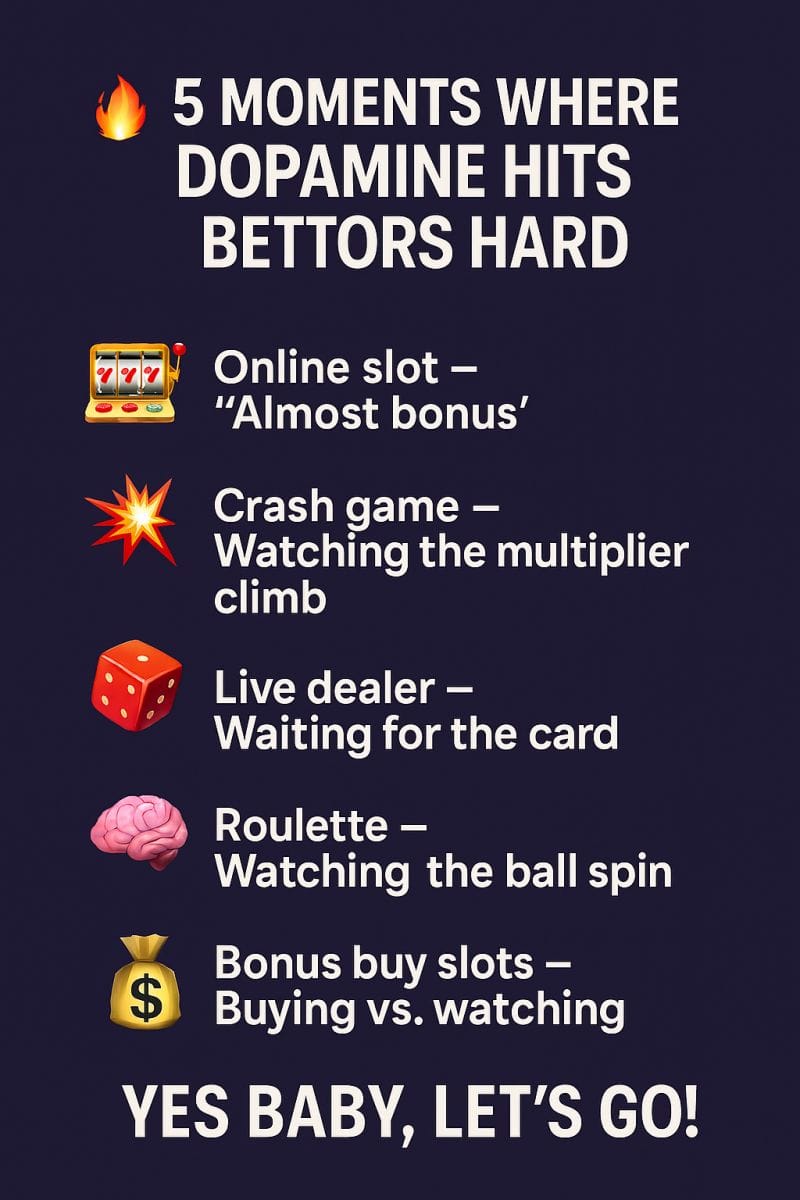
Let me show you 5 examples where dopamine kicks in, moments you probably thought were just nice animations or UX:
🎰 1. Online Slot - “Almost Bonus”
You spin and land two bonus symbols and waiting for the third.
Even if you don’t get the 3d symbol, dopamine already spiked.
The thrill is in the almost.
🧨 2. Crash Game - Watching the Multiplier Climb
The multiplier rises: 2x → 4x → 6x
Dopamine rises when the player asks:
“Should I cash out now? Will it crash at 6x or hit 10x?”
🎲 3. Live Dealer - Waiting for the Card
In Blackjack or Baccarat, when the dealer draws the final card.
That pause before the reveal?
That’s the dopamine moment.
🧠 4. Roulette - Watching the Ball Spin
It’s coming. You know it’s coming. But you don’t know when or black/red.
That spinning ball is a dopamine timer in motion.
💰 5. Bonus Buy Slots - Buying vs. Watching
Even clicking “Buy Bonus” gives players a dopamine hit.
They know something big might happen.
In all 5 cases, before the result shows up, the player’s brain is already thinking:
“YES BABY, let’s gooo! Do it, do it, do it!”
So, none of these mechanics are random.
It’s psychology → turned into mechanics → that boost time-in-game, repeat wagers, and retention.
👉 Final thought:
If you build iGaming products, not necessarily games, it’s worth studying where the dopamine spike happens for your players.
Sometimes, the magic isn’t in the outcome.
It’s in what could happen.
Comments